Source coffee milk frothing pitcher for Home Hotel Restaurant
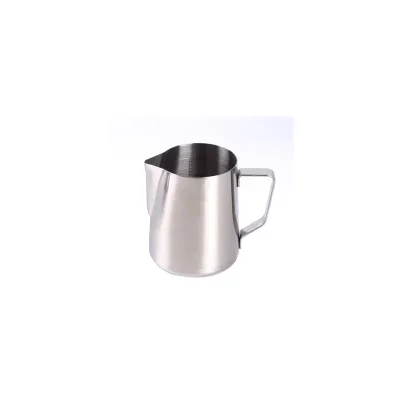
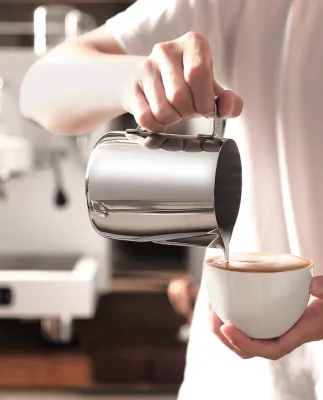
Compare 30 coffee milk frothing pitcher options from verified suppliers. These stainless steel and glass pitchers feature capacities from 150ml to 900ml with custom branding available for home, hotel, and restaurant use.
Key considerations
Products List






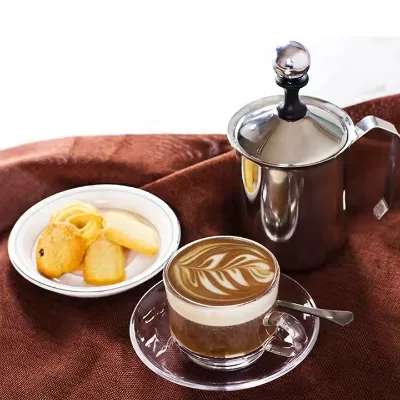
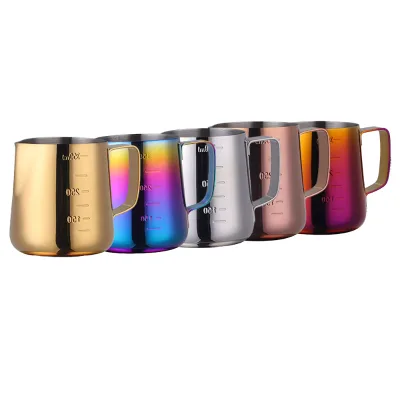
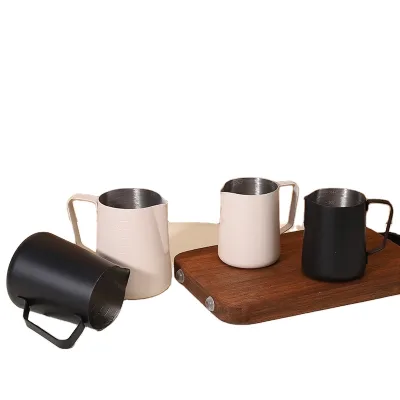
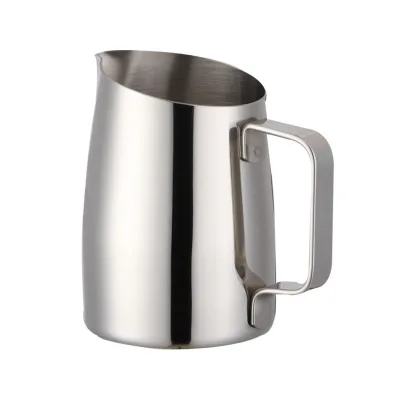

Comprehensive Sourcing Guide
Strategic Sourcing Guide for Coffee Milk Frothing Pitchers
The global demand for specialized coffee equipment has elevated the milk frothing pitcher from a simple utility to a critical component in both commercial espresso workflows and home brewing rituals. For procurement professionals and business buyers, sourcing these items requires a nuanced understanding of material science, manufacturing standards, and supply chain logistics. The market offers a diverse array of options, ranging from single-unit stainless steel vessels to bulk-packaged sets designed for high-volume hospitality environments. This guide synthesizes available product data to provide a structured approach for evaluating suppliers and selecting the right equipment for specific operational needs.
Material Composition and Surface Engineering
The foundation of a high-performance milk frothing pitcher lies in its material composition and surface treatment. Analysis of current market offerings reveals a primary reliance on stainless steel, a material chosen for its durability, thermal conductivity, and resistance to corrosion. In addition to stainless steel, the market also presents options constructed from metal alloys and glass. Stainless steel variants are frequently described as having a "Natural Mirror Finishing" or "Satin Finishing," which not only enhances aesthetic appeal but also influences the cleaning process and milk adhesion properties.
Surface treatment is a critical differentiator. Beyond the standard metallic finishes, some suppliers offer "Color Painting" or "Non Stick Painting" to customize the visual identity of the product. The thickness of the metal wall is another technical specification that buyers must verify, with observed ranges falling between 0.3mm and 1mm. Thicker gauges generally imply better heat retention and structural rigidity, which is essential for maintaining the temperature of milk during the frothing process. Conversely, glass options are available with a "Clear" finish, offering a different aesthetic and thermal profile, though they may require more careful handling in high-traffic environments. When evaluating suppliers, procurement teams should request physical samples to assess the quality of the finish and the uniformity of the wall thickness, as these factors directly impact the longevity and performance of the pitcher.
Technical Specifications and Capacity Variations
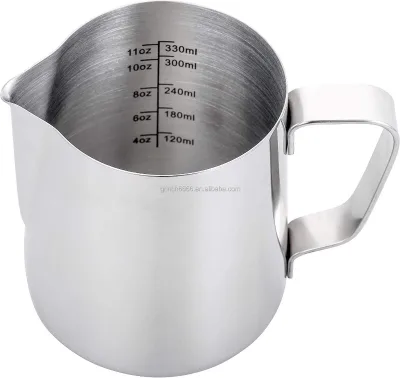
Capacity is the most immediate specification buyers must align with their operational volume. The product data indicates a wide spectrum of capacities, including specific measurements such as 150ml, 350ml, 500ml, 900ml, and 14 oz. These variations cater to different use cases, from single-serve home espresso machines to large-scale hotel and restaurant operations. The product models associated with these capacities, such as LH150L, LH350L, LH900L, and XLH350, suggest a standardized naming convention that helps in inventory management and reordering.
Beyond volume, the physical dimensions and packaging standards are vital for logistics planning. Observed packaging standards include specific carton dimensions, such as 504040cm for 36 pieces weighing 14-15 kg, and 593961cm for 36 pieces. These metrics are essential for calculating shipping costs and warehouse storage requirements. The "Pieces" attribute is noted as "Single" for individual units, yet the packaging data implies bulk shipping of 36 units per carton. Buyers must clarify whether the "Single" designation refers to the unit type or the minimum order unit, as this distinction affects the Minimum Order Quantity (MOQ) calculations. Furthermore, the presence of a handle is a standard feature across most models, classified under "Cup Accessories," ensuring ergonomic handling during the pouring and steaming process.
Functional Applications and Operational Context
The intended usage environment dictates the required durability and feature set of the pitcher. The observed usage categories span Home, Hotel, Restaurant, and Office settings. In a home context, the focus may be on aesthetic simplicity and ease of cleaning, whereas commercial settings like hotels and restaurants prioritize high-volume throughput and robust construction. The "Simple" style and "Silver" color are common attributes, aligning with a modern, minimalist design language that fits various interior decors.
Functionally, these pitchers are classified under "Espresso Coffee" and "Milk Pitcher" purposes, often grouped within "Coffee or Tea Sets." The "Feature" attributes highlight "Sustainable" and "Eco-Friendly" characteristics, which are increasingly important for brands with corporate social responsibility goals. Additionally, some models are marketed with "Health Care" features, suggesting materials that are safe for food contact and resistant to bacterial growth. The "Leak Proof" attribute is another critical functional requirement, ensuring that milk does not spill during transport or cleaning. Buyers should verify that the specific model selected for a high-volume restaurant environment meets the "Stocked" availability status to ensure immediate deployment without long lead times.
Customization and Branding Capabilities
One of the most significant advantages of sourcing from this market segment is the availability of customization. The product data explicitly states that "Customization" and "Customized" options are available. This allows businesses to align the equipment with their brand identity. The specific customization methods identified include "Printed," "Embossed," and "Engraved" logos. These techniques can be applied to the surface of the pitcher, providing a professional look that reinforces brand recognition in a commercial setting.
The "Standard" attribute for some models is listed as "Customized," indicating that dimensions, capacities, or finishes can be tailored to specific client requirements. This flexibility is particularly valuable for large chains or boutique coffee shops seeking unique equipment. However, buyers must be aware that customization often impacts the MOQ and lead time. While the general MOQ range observed is between 2 and 5000 units, custom orders may require higher thresholds. The "prod_packing" options, which include "White or Color Box," also offer a layer of customization for the retail presentation, allowing suppliers to package the product in a way that matches the buyer's branding strategy.
Supplier Evaluation and Quality Assurance
Evaluating suppliers for milk frothing pitchers requires a rigorous approach to quality assurance. The origin of the products is consistently noted as "China," a major manufacturing hub for kitchenware. To ensure quality, buyers should look for suppliers who provide "machinery test reports," which are listed as "Provided" for certain models. These reports offer objective data on the manufacturing process and the structural integrity of the equipment. Additionally, the "core components" are identified as "Steel," which serves as a baseline verification for material authenticity.
When assessing a supplier, procurement teams should verify the "Classification" of the product to ensure it meets the specific needs of the "Coffee or Tea Sets" category. The presence of "Eco-Friendly" and "Sustainable" features should be backed by tangible evidence rather than marketing claims. Buyers should also inquire about the "Surface Treatment" processes to ensure that finishes like "Natural Mirror Finishing" are durable and resistant to scratching. The "Thickness" range of 0.3mm to 1mm should be confirmed through independent testing, as this directly correlates with the product's ability to withstand the thermal shock of steaming milk. A reliable supplier will be transparent about these specifications and willing to provide samples for physical inspection before committing to a large order.
Cost Drivers and Procurement Strategy
The cost of sourcing milk frothing pitchers is influenced by several variables, including material type, customization level, and order volume. The observed price range in the market is between 0.75 and 10 USD, reflecting the diversity from basic stainless steel models to more complex, customized, or glass variants. The "MOQ" range of 2 to 5000 units provides flexibility for buyers of all sizes, from small startups to large distributors. However, the "Standard" packaging dimensions and weight (e.g., 14/15 KGS per carton) are critical factors in determining the total landed cost, as they affect shipping efficiency and freight charges.
Buyers should consider the "Feature" attributes as value drivers. Products marked as "Stocked" may command a slightly higher price due to immediate availability, whereas "Customized" items might offer better long-term value through brand differentiation. The "Function" of the pitcher, specifically its suitability for "Espresso Coffee," should be matched with the buyer's specific equipment to avoid compatibility issues. When negotiating, buyers should leverage the "Customization" options to negotiate better pricing on bulk orders. It is also essential to verify the "prod_model" numbers to ensure that the correct specifications are being quoted, as different models like EPT-SC001 or CRPI001 may have distinct cost structures based on their unique features and materials.
Long-Term Procurement and Sustainability
Sourcing decisions for milk frothing pitchers should extend beyond the initial purchase to consider long-term operational efficiency and sustainability. The "Eco-Friendly" and "Sustainable" features highlighted in the product data suggest that these items are designed with environmental impact in mind. Buyers should verify the lifecycle of the product, including its recyclability and the durability of the surface treatments. The "Health Care" and "Leak Proof" attributes contribute to long-term value by reducing waste and ensuring food safety over extended periods.
For businesses aiming to build a sustainable supply chain, the "Customized" nature of the products offers an opportunity to reduce packaging waste by optimizing the "White or Color Box" options. Additionally, the ability to source from a supplier who provides "machinery test reports" ensures that the products meet consistent quality standards, reducing the risk of premature failure and the need for frequent replacements. By focusing on high-quality materials like stainless steel and verifying the "Thickness" and "Surface Treatment" specifications, buyers can secure equipment that performs reliably in demanding environments, ultimately supporting a more sustainable and efficient procurement strategy.
FAQs
What materials are used for coffee milk frothing pitchers?
Stainless steel is the primary material used, though metal alloys and glass options are also available. Buyers can find pitchers with natural mirror or satin finishes, with wall thicknesses ranging from 0.3mm to 1mm for optimal durability.
Which capacities are available for these milk pitchers?
Capacities range from 150ml to 900ml, including specific options like 350ml, 500ml, and 14 oz. These variations cater to different needs, from single-serve home use to high-volume operations in hotels and restaurants.
Can buyers customize the logo on the pitcher?
Yes, customization is available with options for printed, embossed, or engraved logos. This allows businesses to align the equipment with their brand identity while selecting from standard silver or multicolor finishes.
How is the product packed for shipping?
Products are packed in white or color boxes, often shipped in bulk cartons containing 36 pieces. Standard carton dimensions vary, such as 50x40x40cm weighing 14-15kg, which helps in planning logistics and storage.
What is the origin of these coffee pitchers?
The products originate from China, a major manufacturing hub for kitchenware. Buyers should verify that suppliers provide machinery test reports to ensure the steel core components meet quality standards.
Are there eco-friendly features available?
Yes, many models feature sustainable and eco-friendly attributes. These pitchers are designed for health care compliance and often include leak-proof designs to ensure safety and reduce waste in commercial settings.